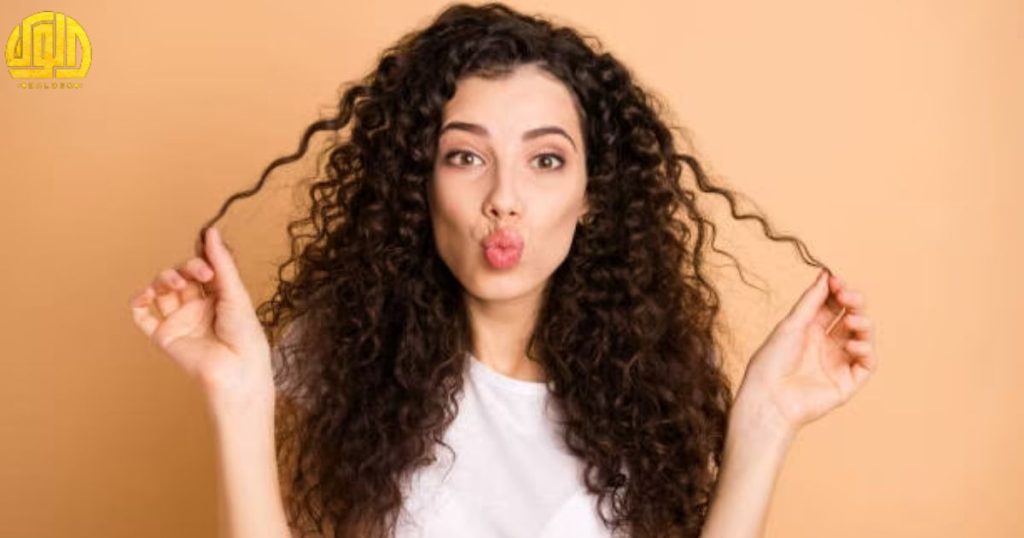
The best hair oils for curly hair are rich, sealing oils that lock in moisture, coconut, olive, argan and castor. Curly hair is naturally the driest hair type because the scalp oils struggle to travel down its twists and turns, so it needs oils that seal in moisture, define the curls and fight frizz. For most people, coconut or olive oil as a treatment plus a little argan on the ends is the winning combination. This guide covers the best oils for curly hair, how to use them, and how to build a simple curl care routine. See the full range on our best hair oil in Pakistan guide.

Why curly hair needs oil more than any other hair type
Curly hair has a natural disadvantage: its spiral shape stops the scalp natural oils from sliding down the strand the way they do on straight hair. That leaves the lengths and ends dry, which is why curly hair is so prone to frizz, tangles and breakage. Oiling puts that missing moisture back and seals it in, so curls look defined, soft and shiny instead of dry and fuzzy. In short, the drier your curls, the more they benefit from the right oil.
Best oils for curly hair
These oils suit curly and coarse hair best, because they seal in moisture and smooth the cuticle.
- Coconut oil penetrates the strand and cuts protein loss, the top choice for dry, damaged curls.
- Olive oil is deeply conditioning for very dry, coarse curls.
- Argan oil is a light finisher that tames frizz and adds shine without weighing curls down.
- Castor (arandi) oil seals and defines, best mixed with a lighter oil.
- Jojoba oil is light and scalp friendly, good for fine curls and oily scalps.
Curly hair oils at a glance
Use this quick guide to match the oil to your curls.
| Oil | Best for | How it helps curls |
|---|---|---|
| Coconut | Dry, damaged curls | Deeply penetrates and reduces breakage |
| Olive | Very dry, coarse curls | Rich, intense conditioning |
| Argan | Frizz and dullness | Light shine and smoothing on the ends |
| Castor | Thick curls, definition | Seals and defines, mix with a lighter oil |
| Jojoba | Fine curls, oily scalp | Light moisture without heaviness |
Best oil for dry curly hair
For genuinely dry, thirsty curls, reach for the richest sealing oils. Coconut oil used as a pre wash treatment is the gold standard, as it soaks into the strand and stops moisture loss. Olive oil is a great alternative for very coarse curls, and many people mix the two. Apply generously to damp hair, focusing on the mid lengths and ends, leave it to soak, and wash gently. For a complete dry hair plan, see our best oil for dry hair guide.
Best oil for frizzy curly hair
Frizz is the number one curly hair complaint, and it happens when the cuticle lifts and loses moisture, especially in humidity. A light finishing oil like argan smooths that cuticle and seals in moisture, so curls look defined and glossy rather than fuzzy. Warm a few drops and scrunch them gently into damp curls after washing, then let them air dry. A little hair serum can add extra frizz control on humid days.
How to apply oil to curly hair
Technique makes all the difference with curls. The secret is to work on damp, not dry, hair so the oil seals in the water.
- Wash and lightly towel-dry so the hair is damp, not dripping.
- Warm a suitable oil, or oil blend, in your palms.
- Scrunch it gently into the curls in sections, from the ends upward.
- Avoid heavy oiling at the roots, especially if your scalp is oily.
- Let the curls air dry, or use a diffuser on low heat, and do not brush them dry.

A simple oiling routine for curly hair
Once or twice a week, treat your curls to a richer oil, coconut or olive, as a pre wash mask, left in for an hour or overnight, then washed out gently. After every wash, while the hair is damp, scrunch in a little argan or jojoba to seal and define. Between washes, a drop of oil or serum tames any frizz. Keep the routine gentle and consistent, and pair it with the steps in our hair care routine for hair growth guide.
Mistakes to avoid with curly hair
- Brushing curls when dry, which causes frizz and breakage, always detangle damp with fingers or a wide tooth comb.
- Using harsh, sulphate heavy shampoos that strip curls of moisture.
- Applying oil only to dry hair, when damp hair seals in moisture far better.
- Using too much heavy oil at the roots, which flattens the curl pattern.
- Skipping regular conditioning and masks that curls badly need.
Understanding your curls
Curly hair ranges from loose waves to tight coils, and the tighter the curl, the drier it tends to be and the more sealing oil it needs. Many people follow gentle, sulphate free routines to keep their curls healthy and defined. If you would like to read more about curl care principles, the Curly Girl Method page on Wikipedia is a useful overview, and you can browse hair research through the United States National Library of Medicine at PubMed.
Curly hair is beautiful, and the right oil is the key to keeping it soft, defined and frizz free. Choose a rich sealing oil like coconut or olive for moisture, finish with a little argan for shine, apply to damp hair, and keep the routine gentle and regular. Ready to nourish your curls? Explore natural oils on our best hair oil in Pakistan guide, with free delivery and cash on delivery.
Best oil for your curl type
Wavy hair
Loose waves are the least dry curl type, so they need the lightest touch. Stick to light oils like argan or jojoba, used sparingly on the ends, so the waves stay soft and bouncy rather than weighed down and greasy.
Curly hair
Defined curls sit in the middle and love a balance of moisture and lightness. A coconut or olive pre wash treatment plus a little argan to finish gives soft, defined, shiny curls without heaviness.
Coily and tightly curled hair
Tight coils are the driest of all and drink up moisture, so they need the richest oils, generously applied. Coconut, olive and castor blends work beautifully, sealing in as much moisture as possible to keep the coils soft and reduce breakage.
The LOC method for curly hair
Many people with curls use a simple layering trick called the LOC method, which stands for Liquid, Oil, Cream. You start with damp hair or a little water (the liquid), then seal it with your chosen oil, then add a curl cream on top. The oil traps the water inside the strand so your curls stay hydrated far longer, which is exactly what dry curly hair needs. It sounds fancy, but it is really just water first, oil second, cream last, and it makes a big difference to how long your curls stay soft and defined between washes.
How to know your curls need more oil
Your curls will tell you when they are thirsty. The signs include frizz that will not settle, curls that look dull rather than shiny, more tangles and breakage than usual, and a rough, straw like feel. If you notice these, your hair needs more moisture and sealing, so add a richer oil treatment and be more gentle with heat and brushing. Curls that are properly moisturised feel soft, spring back when you stretch them, and hold their shape.
Oil versus serum, cream and gel for curls
Each product does a different job for curly hair, and they work best together. Oil seals in moisture and nourishes. A serum smooths and adds shine, ideal for frizz control on the lengths. Curl creams add hydration and softness, while gels give hold and definition. For a simple routine, an oil treatment before washing, a light oil or serum to finish, and a curl cream or gel for styling covers everything without overcomplicating things.
Final thoughts on oiling curly hair
Curly hair is not difficult once you understand it, it is simply thirsty. Give it the rich, sealing oils it craves, apply them to damp hair so the moisture stays locked in, finish with a light oil for shine, and treat your curls gently. Do that consistently and your curls will reward you with softness, definition and a healthy glow. Whether your hair is wavy, curly or tightly coiled, the right oil, used the right way, is the single best thing you can do for it.
Protecting your curls overnight
How you sleep has a surprising effect on curly hair. Cotton pillowcases pull moisture from the curls and create friction that causes frizz and breakage overnight. Switching to a silk or satin pillowcase, or wrapping your hair in a silk scarf, keeps the curls smooth and hydrated until morning. Many people also loosely gather their curls into a soft, high pineapple on top of the head to protect the curl shape while they sleep. A little oil smoothed over the ends before bed helps seal in moisture through the night. These small night time habits mean you wake up to soft, defined curls that need far less work to refresh in the morning.
Frequently asked questions
What is the best hair oil for curly hair?
The best oils for curly hair are rich, sealing ones: coconut and olive for deep moisture, argan as a light frizz-taming finisher, and castor or jojoba depending on your curl type. A coconut treatment plus a little argan on the ends suits most curls.
Which oil is best for dry curly hair?
Coconut oil is the top choice for dry curls because it penetrates the strand and locks in moisture, with olive oil a great alternative for very coarse, dry curls. Use them as a pre-wash treatment on damp hair.
How do I use oil on curly hair?
Work on damp, not dry, hair. Warm the oil and scrunch it gently into the curls in sections, from the ends up, avoiding heavy roots, then let the curls air dry or diffuse on low heat.
What oil is best for frizzy curly hair?
A light finishing oil like argan is best for frizz. Scrunch a few drops into damp curls after washing to smooth the cuticle and seal in moisture, and add a little hair serum on humid days.
How often should I oil curly hair?
Once or twice a week as a richer pre-wash treatment, plus a little light oil on the ends after every wash. Consistency keeps curls soft, defined and frizz free.

Dr. Fazila Abbas stands as a distinguished expert in the realm of skincare and haircare, bringing a wealth of knowledge and experience to her esteemed position as a specialist. With a fervent dedication to the science of dermatology, Dr. Abbas has carved a niche as a trusted advisor in the pursuit of radiant skin and healthy hair.
Her academic journey includes rigorous training in dermatological sciences, where she honed her skills and gained profound insights into the intricacies of skincare and haircare. Dr. Fazila’s holistic approach to beauty emphasizes the integration of medical expertise with personalized care, ensuring that each individual receives tailored solutions for their unique needs. As a respected professional, she continues to contribute to the field through research, innovative treatments, and a commitment to empowering others to look and feel their best. Driven by a passion for transformative skincare and haircare, Dr. Fazila Abbas stands as a beacon of excellence in the world of dermatology.